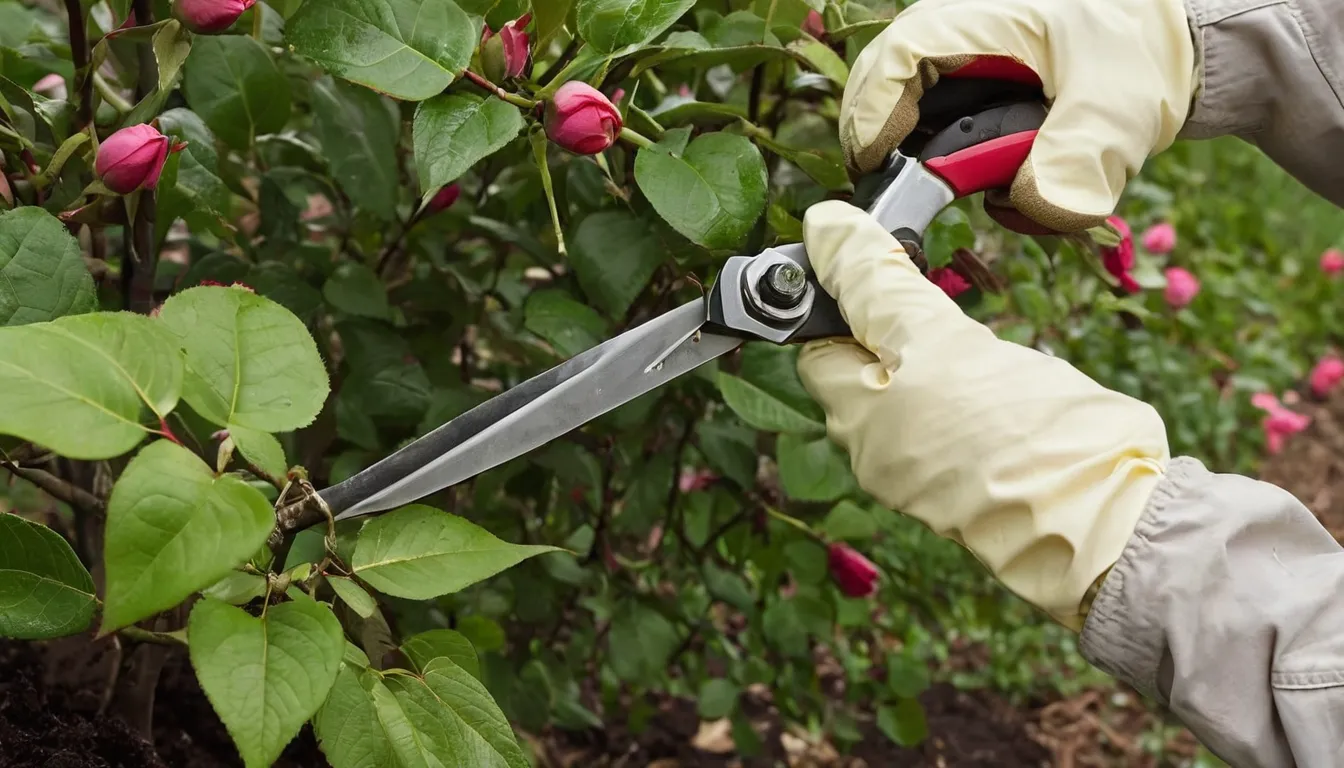
Tools and cuts
Use sharp bypass pruners for canes up to about the thickness of a finger, loppers for thicker canes and a small pruning saw for old woody stems at the base. Thick gloves that cover your wrists help a lot. Clean blades between plants if you are cutting out diseased wood.
- Cut about a quarter of an inch above a healthy bud, sloping the cut away from the bud so water runs off.
- Choose outward-facing buds where you can. The new shoot will grow out, keeping the center of the plant open.
- Cut back to healthy wood. Healthy canes are usually creamy or pale green inside; dead ones are brown or gray.
The three Ds, any time
Whatever the season, you can remove wood that is dead, damaged or diseased. Also cut off any suckers, shoots that come from below the bud union on a grafted rose. Follow a sucker back to where it starts and remove it as close to the root as you can.
Late winter or early spring: the main prune
Repeat-flowering roses get their main prune as winter ends and the buds begin to swell. In mild regions that may be January or February. In cold regions it is often April or later. A common rule of thumb is to prune when forsythia flowers in your area. Pruning too early invites frost damage to tender new shoots; pruning a little late does far less harm.
- Remove the three Ds and any suckers.
- Take out thin, weak canes and any that cross through the center or rub against each other.
- On older plants, remove one or two of the oldest canes at the base.
- Shorten the remaining canes. Hybrid teas are often cut back by about half or more. Floribundas and shrub roses usually by about a third.
- Clear away old leaves and mulch from under the plant, then add fresh mulch.
Once-flowering roses, including many old garden roses and most ramblers, are the exception. Prune them just after they flower, or you will remove the wood that carries next year's blooms.
Summer: deadheading and tidying
Deadheading means removing spent flowers. On repeat bloomers it encourages the plant to flower again sooner. The traditional method is to cut back to just above the first leaf with five leaflets below the spent flower. Many gardeners now simply snip off the old bloom, which also works well on most roses.
Summer is also the time to prune once-flowering roses after their show, to remove any shoots damaged by storms, and to pick off leaves badly affected by disease.
Fall: ease off
About six to eight weeks before your usual first frost, stop deadheading repeat bloomers. Letting hips form signals the plant to slow down and harden its wood for winter. Avoid any hard pruning in fall, since it can trigger soft new growth that frost will kill. You can shorten very long canes on tall roses so winter winds do not whip them around and loosen the roots.
Winter: protection
In cold regions, many gardeners protect the base of grafted roses after the ground starts to freeze. A mound of soil or compost about 8 to 12 inches high over the base helps shield the bud union. Pull the mound back gently in spring as the weather warms. Climbers can have their canes wrapped in burlap in very exposed spots.
In mild regions, little winter protection is needed. Winter is instead the time for the main prune and for planting bare-root roses.
The rose year page lays out all of these jobs on one calendar for cold-winter and mild-winter gardens, and explains how to adjust them to your own area.